Feather found in fossil feces
New features from the Chicago specimen show how Archaeopteryx fed fast for flying.
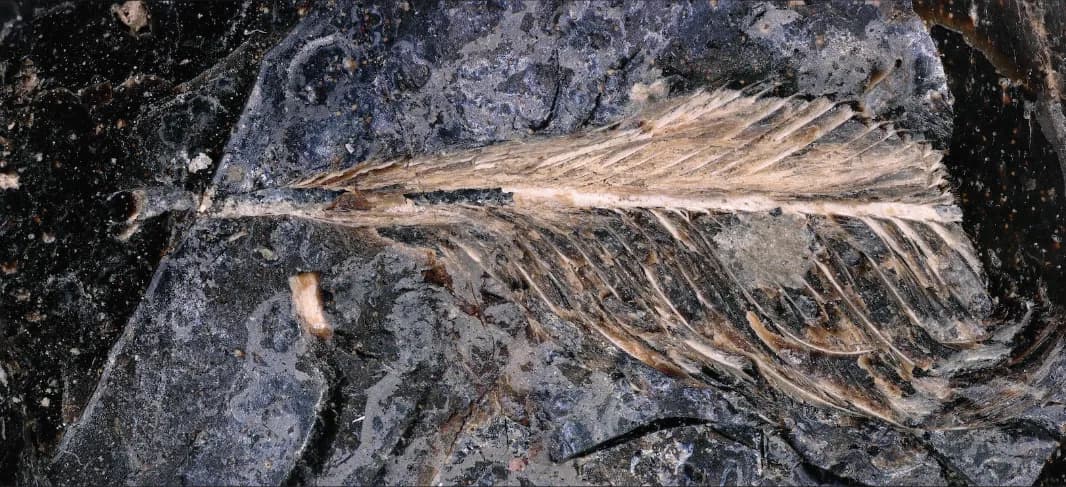
The Hell Creek Formation is one of the most studied dinosaur-bearing rock units in the world. Paleontologists have combed over these deposits on an annual basis for more than a century. No fossilized feathers have ever been found… until now. Paleontologist Dave DeMar Jr from the Burke Museum picked up an unusual nodule and the rest is history. The nodule turned out to be part of feces left by a theropod dinosaur and the feathers inside are suspected to belong to hesperornithiform bird. These birds have been known since 1872 but their feathers have never been seen until now. Hesperornithiforms are secondarily flightless, subaqueous foragers… And their feathers show it! We see the same adaptations for life under the water, like increased barb density, as in modern swimming birds. However, the body feathers are very different, resembling the primitive feathers of early dinosaurs that also present in some early birds (like enantiornithines, link to baby enantiornithines had it tough). These feathers are simple suggesting they were less effective at trapping air, which is how feathers keep the body warm. The mass extinction that wiped out all dinosaurs including many lineages of birds was triggered by an asteroid that caused an impact winter. Particulates blocked out the sun causing rapid cooling and collapse of the food chain. In these conditions, feathers that are better for insulation, like we see in modern birds, may have been one of the major factors that resulted in some birds surviving and others, like hesperornithiforms, going extinct.